

Cristy Burne
Cristy grew up climbing trees, jumping drains, chasing runaway cows and inventing stories. Before she became a writer, she was science circus performer, garbage analyst, Santa’s pixie, and a teacher.
Currently Cristy is a children’s author, science writer and presenter who has worked as a science communicator for 20 years across Australia, the US, the UK, Japan, South Africa, Switzerland and beyond. She has a passion for STEM, loves learning through doing, and aims to inspire creativity, daring and resilience in her readers. She is a sought-after education presenter.

Q & A with Cristy:
What is your favourite STEM subject/area and why?
Right now I’m super-excited by virtual reality (VR). It’s coding, it’s art, it’s creativity, it’s games. It’s fact, it’s fantasy, it’s our history, it’s our future.
I think VR will change the way we live, starting with travel (dive the Titanic or explore the Taj Mahal), education (learn to remove someone’s tonsils or experience life in ancient Rome), and entertainment (shoot invading orcs with a bow and arrow or survive in pre-colonial Australia)(OMG…I had so much fun shooting orcs! Seriously!).
If you could invent something, what would it be?
A solution to climate change.
What is your favourite science fact?
That platypus are mammals but they lay eggs! And they can hunt prey underwater, even though their eyes, ears and nostrils are closed! And they have webbed toes, poisonous spurs and babies the size of jelly beans. And they’re cuuuuuuuute!
What books or series did you love as a child?
I loved anything by Roald Dahl, plus mysteries like the Hardy Boys, The Three Investigators, Trixie Beldon and Nancy Drew.
I don’t like horror books, and I’m especially scared of zombies. (Don’t even talk to me about zombies.) (Don’t even mention the Z-word.)
Why do you think there has been so much interest around STEM pathways and STEM in schools in recent years?
If you want to have a creative, well-paid job that makes a difference in the world, STEM is where it’s at.
I didn’t enjoy science when I was in primary school, because I didn’t understand what science was. Now I know: science is discovering new things. Technology is inventing new things. Engineering is making new things. Maths is discovering patterns and using them to do science, technology and engineering.
STEM is basically being creative, solving problems, making stuff. There’s just so much you can do.
Hey, what’s that behind you? Looks like a z—
No. Don’t even. Goodbye. This interview is over.

Claire Saxby
Claire Saxby was born in Melbourne but has lived far and wide, including Bougainville Island in Papua New Guinea, where she discovered the most beautiful reefs and beaches in the world. She worked in community health for several years while writing books for children.
Claire’s award-winning books fall into three main categories – narrative non-fiction, history and humour. She is widely curious about everything, and passionate about encouraging curiosity, wonder and understanding in young people. She works part-time in a bookshop, where she loves talking to readers and running sessions on how to read to babies.

Q & A with Claire:
What is your favourite STEM subject/area and why?
Biology. I’m totally fascinated with how things work, and for me that means living things. From tiny shrimps, to blue whales I want to understand them all! I also love the way all living things connect to one another and need each other. It’s like the most amazing jigsaw ever.
If you could invent something, what would it be?
I’d invent a means to breathe underwater without scuba gear. Then I could swim forever without having to come up for air. I might have to invent a heated wetsuit and flippers too!
What is favourite science fact?
I have so many favourites! Goannas in the north of Australia ‘aestivate’, which is like hibernating but for the hot weather, not cold. And magically, they know when to wake up. Great white sharks can turn their stomach inside out to vomit bits of dinner that they can’t digest. Kookaburras use both monocular (one eye) and binocular (two eye) vision to increase their chances of catching dinner. (hmm are you seeing food connections here?) What about this one – emu dads sit on their eggs for up to eight weeks without eating or drinking! Oh, that’s still about food, just the not-eating!
What books or series did you love as a child?
Everything! I loved fiction, nonfiction, traditional stories from different places and poetry. We had a four-book encyclopedia set and my favourite section was about optical illusions and brain tricks.
Why do you think there has been so much interest around STEM pathways and STEM in schools in recent years?
More than ever before we need to understand what we are doing (have done) to this earth and how we can start doing it much better. It’s not time for bandaids, it’s time for STEM. Integrated STEM studies foster and extend curiosity and scientific investigation, and show the pathways to creative problem-solving.

Dianne Wolfer
Dianne grew up in outer Melbourne, where she made tree-houses and imagined she was Silky from The Magic Faraway Tree. Other days she was the Muddle-headed Wombat. When she was ten, Dianne moved to Bangkok and went on to study back in Melbourne before backpacking through Asia and teaching children in remote western Nepal.
Dianne’s award-winning books have been published in China, Japan, Poland, USA and made into stage plays. She is a bookworm who reads every day. She especially loves animal stories and spent five years researching her favourite word, anthropomorphism (for her PhD). Inspiring kindness and imaginative thinking is Dianne’s life work.

Q & A with Dianne:
What is your favourite STEM subject/area and why?
My favourite STEMs are Marine Biology and Sustainability and the ways they connect. Our oceans are home to amazing creatures. Some of my favourites are nudibranchs, vampire squid, dugongs and leafy sea dragons. Within the nudibranch family alone there are over 2000 species, with more being identified each week. And sustainability is key to protecting this diversity.
For all this wonder, the ocean is also home to massive human-made problems like ghost nets, micro plastics, overfishing and increased acidity. Two of my novels (The Shark Caller & Dolphin Song) explore my concern for our oceans.
If you could invent something, what would it be?
A human-animal translation app. I’d love to understand animals, even though I might not like what they’re saying about humans. Imagine communicating with an orca. Or greeting a bandicoot as it crosses a bush track. Or discussing wind thermals with a pelican. Their ways of experiencing the world would be so interesting, more sensory and organic.
What is favourite science fact?
Octopus have blue blood and three hearts and the ability to solve puzzles and squeeze themselves through tiny spaces. What fabulous creatures!
What books or series did you love as a child?
The Narnia series; which links to questions one and two… It’s sad to imagine The Dawn Treader sailing through a sea of micro plastic instead of a sea of white flowers. I also loved The Magic Faraway Tree and the achingly beautiful Storm Boy. Maybe my tears for Mr Percival sparked my passion for wildlife protection and conservation.
Why do you think there has been so much interest around STEM pathways and STEM in schools in recent years?
The pace of change in STEM applications is whizzing ahead so quickly. It’s hard to keep up, but we need to be smarter and leave lighter footprints. Our planet needs innovative marine biologists and environmental engineers.

EMILY GALE
Emily Gale grew up in London and migrated to Australia in 2008. She loves animals and recently became fascinated by Australian birdlife. She lives near a part of the Yarra river in Melbourne where well over 100 different species of birds have been identified. Emily worked in publishing for many years and now writes for children and teenagers. Her YA novels have been shortlisted for several awards.
Q & A with Emily:
What STEM subject/area are you most interested in, and why?
My son opened my eyes to the natural world with his early enthusiasm for and affinity with all living things. His fascination with anything that flies, walks, swims, glides, slithers or crawls has been infectious over the years! So of course that means I’m also very interested in the environment, because you can’t be passionate about wildlife without the bigger picture of climate-smart conservation.
If you could invent something, what would it be?
Something that deals with the amount of plastic in oceans, as we are failing catastrophically on that score in terms of changing human behaviour. Of course it would have to be a substance that doesn’t cause further damage to the water or any of its inhabitants. A plastic-eating bacteria.
What is your favourite science fact?
If the sun were hollow, it would take about one million earths to fill it - but there are other stars that are much, much bigger. I love contemplating the size of the universe. It is mind-boggling and humbling.
What books or series did you love as a child?
I loved time-slip novels more than anything - for example Tom’s Midnight Garden and Charlotte Sometimes. There was nothing very scientific about how this time-travel took place, but to this day I love reading theories about the possibilities of bending time or the existence of worm-holes.
Why do you think there has been so much interest around STEM pathways and STEM in schools in recent years?
The world is changing so rapidly that we simply need a greater percentage of people who can comprehend the multifarious changes and work in those fields that will dominate the future of Planet Earth.

REBECCA LIM
Rebecca Lim is an Australian writer, illustrator, editor and lawyer and the author of over twenty books. Her books have featured on numerous award shortlists, including the Prime Minister’s Literary Awards, the CBCA Notables, and the Aurealis Awards.
Rebecca is a co-founder of the Voices from the Intersection initiative to support emerging young adult and children’s authors and illustrators who are First Nations, People of Colour, LGBTIQA+ or living with disability.
Q & A with Rebecca:
What STEM subject/area are you most interested in, and why?
I’m fascinated by most branches of terrestrial science generally, but I’m really excited by the possibility of extraterrestrial and interstellar travel. About our own planet, Enrico Fermi the physicist once asked plaintively, Where are all the aliens? The fact that we might be ‘the aliens’ one day is something to look forward to. Hopefully, we’re sensible and benevolent ones.
If you could invent something, what would it be?
Time travel – if I could be sure that casual time travellers wouldn’t stuff things up for other creatures by mucking around with the space-time continuum and leaving litter everywhere.
What is your favourite science fact?
That, according to NASA, one teaspoonful of a neutron star (if we could get close to it without evaporating in the heat) would weight 4 billion tonnes!
What books or series did you love as a child?
The Neverending Story by Michael Ende, The Chronicles of Narnia by C.S. Lewis, the Lord of the Rings trilogy by J.R.R. Tolkien. I’m an out-and-proud fantasy geek.
Why do you think there has been so much interest around STEM pathways and STEM in schools in recent years?
STEM subjects help kids understand how the world (and the galaxy! and the universe!) work. Who wouldn’t want to be around that? They also encourage critical thinking, problem solving, great observation skills, creativity and innovation. STEM is changing our world, and the people who embrace STEM subjects will be at the forefront of shaping our collective future and helping us to adapt to life here, and life off planet when that day finally arrives.

KIM DOHERTY
Kim Doherty is an editor, storyteller, teacher, and a mum to two young children – Molly and Xavier – who she hopes will be inspired by the amazing world of science and Alan’s story. This is Kim’s second book for children, the first was about Mt Everest and the amazing facts, death-defying adventures and strange myths of the world’s highest mountain.
When she’s acting like a grown-up (which is not very often), Kim is an award-winning editor-in-chief who has led some of Australia’s best-loved publications, from The Australian Women’s Weekly to Kidspot. She is passionate about sharing Australian stories and the importance of lifelong learning. Kim is hoping to complete her most recent educational endeavour (the world’s slowest Master of Laws) sometime before the end of the century.
Q & A with Kim:
What is your favourite STEM subject/area and why?
I love the idea of physics: brilliant scientists of the past - I envisage Newton and Einstein here - offering practical explanations for everything from the origins of the universe to why electricity doesn't fall out of powerpoints (the latter is a fact that still, frankly, puzzles me). My personal study in science was sadly and regrettably limited, but I have huge admiration for those who've stretched the boundaries of our collective knowledge.
If you could invent something, what would it be?
A beam-me-up Scotty machine. I don't like sitting in traffic.
What is your favourite science fact?
Apparently giraffes have the same number of bones in their necks as humans. My 7 year old daughter told me that this morning. Home schooling is beneficial to us all.
What books or series did you love as a child?
My parents had a full set of Encyclopedia Brittanica that we'd inherited from a kindly neighbour. The pages were transparently thin, jam packed with tiny font covering all sorts of random subjects, and they smelt a little musty (rather like our neighbour). I'd sprawl out on our lounge room carpet, open a random page and read, read, read. Those books were the internet of my childhood.
Why do you think there has been so much interest around STEM pathways and STEM in schools in recent years?
I think we humans have always strived to expand our horizons - to go outside the cave, to climb the mountain, swim the river, cross the plains and now shoot out into space. STEM subjects offer the chance to explore new horizons, big and small. I suspect that right now, science is also recognised as mankind's best hope for solving the many challenges facing humanity and our planet.

DANIELLE CLODE
Danielle Clode grew up on a boat sailing around Australia with her parents and her cat. She has worked as a zookeeper, in museum collections and feeding giant fish at an underwater observatory. She studied at Adelaide University before doing her zoology doctorate at Oxford University studying seabirds in Scotland. She is now an Associate Professor of Writing at Flinders University in Adelaide. Danielle has written many award-winning nonfiction science books about bushfires, sailing ships, killer whales and nature. She has written three books on Australian fossils including Prehistoric Giants: The Megafauna of Australia, Prehistoric Marine Life of Australia’s Inland Sea and Australia’s Amazing Fossils: From Dinosaurs to Diprotodons.

Q & A with Danielle:
What is your favourite STEM subject/area and why?
I love biology because I love the natural world. I spent a lot of time on boats when I was a kid and this gave me a passion for nature and the animals in it. When I went to university I studied animal behaviour and conservation biology because we desperately need to do more to protect our environment.
If you could invent something, what would it be?
That’s a bit like only being given one wish! Sticking to feasible and useful things, probably something to break down plastic pollution. It’s going to be with us for such a long time.
What is favourite science fact?
It’s not quite a fact but I love the possibility that life on earth might have been seeded from life on other planets (or the other way around). Interplanetary nanobacteria is a pretty exciting idea.
What books or series did you love as a child?
I read a LOT of books as a kid – pretty much everything in my school library. I loved science fiction, fantasy, historical fiction, nonfiction and illustrated books. One favourite was Elyne Mitchell’s Silver Brumby series which I loved for its distinctive Australian landscape and that the story is told from an animals point of view without many humans in it.
Why do you think there has been so much interest around STEM pathways and STEM in schools in recent years?
Scientific literacy is just as important as reading literacy and numeracy. It’s not just about knowing stuff about science, it’s a way of thinking critically and creatively about the world around us, knowing how to answer questions and challenge our assumptions about the world. We don’t all have to be scientific specialists, but everyone can contribute to scientific advances. Thinking scientifically can really open up new worlds for everyone.

PENNY TANGEY
Penny Tangey writes humorous books for young people. Her book As Fast As I Can won the Readings Children’s Book Prize and the Queensland Literary Awards Children’s Book Award.
Penny studied arts/science at Melbourne University, majoring in chemistry and Indonesian. While at university, Penny performed stand-up comedy, including in the Melbourne Comedy Festival.
Penny works as a researcher for television quiz shows Hard Quiz and The Chase, but she’s still terrible at trivia. She is studying information management to become a librarian.

Q & A with Penny Tangey:
What is your favourite STEM subject/area and why?
I’ve forgotten most of the maths I learned at university and high school but occasionally a situation arises where I can apply some basic algebra or probability and it’s fun.
I’m also very interested in the history and philosophy of science and enjoy reading the stories of how scientific ideas and technology developed.
If you could invent something, what would it be?
Reducing global heating is the most important challenge facing humanity. To a large extent, the technology needed to do this already exists, however, the influence of fossil fuel lobby groups means politicians aren’t taking action. I’d like to invent some kind of mind-control ray to make them see sense. I would only use it for good though, I promise.
What is your favourite science fact?
The cost of energy generated by wind and solar in Australia is now cheaper than coal.
Also, sharks have existed longer than trees.
What books or series did you love as a child?
I loved Robin Klein’s Penny Pollard series. Penny Pollard was my hero and I thought we were exactly the same. This led me to “love” horses when I’m actually scared of them.
Why do you think there has been so much interest around STEM pathways and STEM in schools in recent years?
STEM jobs and industries are growing and changing all the time. The pandemic has demonstrated the importance of STEM and also the limitations of how science and medicine are used. The record-breaking COVID-19 vaccines showed society’s capacity for rapid scientific discovery and advancement. This isn’t enough, however, because unequal vaccine distribution means vaccines aren’t as effective as they could be.
The big challenge is to use science and technology in ways that advance fairness and justice. Kids are very socially and politically aware and I think many are attracted to STEM because they see the power to do good.

DEE WHITE
Dee White grew up near the sea but instead of being an underwater explorer like Emma, she preferred to explore the world inside her imagination and make up stories.
There are three generations of scientists in her family and Dee cares deeply about the environment and is fascinated by how things work. She is the author of more than 20 books published in USA, UK, Canada, Israel, Australia and New Zealand.
In the name of research, Dee has travelled Australia and overseas, jumped out of planes (with a parachute on), ridden a camel and been up in a hot air balloon. Dee loves writing books that empower readers and inspire them to explore the world outside their own experiences.
Q & A with Dee White:
What is your favourite STEM subject/area and why?
My favourite STEM area is biology because I’ve always loved animals and been interested in how they exist in their surroundings. As a kid we did a lot of bush walking and exploring. My older brother was a keen naturalist and at the end of winter we’d go looking for snakes that were just coming out of hibernation.
If you could invent something, what would it be?
I’d love to somehow make renewable energy accessible to everyone no matter where they lived in the world or how wealthy they were.
What is your favourite science fact?
I love how crocodile mothers look after their babies. They lay 30 to 80 eggs in nests made of vegetation and sealed with mud. When the eggs are ready to hatch, one of the babies calls to the mother who can hear them and feel the heartbeat in her throat.The mother breaks open the nest so that the eggs can hatch. The call of the baby also alerts the siblings that it’s time to hatch. The mother crocodile carries the hatchlings to the water. If an egg doesn’t hatch, she takes it carefully in her mouth and gently manipulates it to crack the shell so the baby can come out.
What books or series did you love as a child?
I loved the Annie with an E books because Anne was feisty and free and very creative.
Why do you think there has been so much interest around STEM pathways and STEM in schools in recent years?
I think there is so much interest around STEM pathways and STEM in schools because with climate change, space exploration and medical issues in the media, people are taking more interest in science and the world around them. STEM is also great for developing creative and analytical thinking and these are assets that contemporary employers seem to want. My son’s a scientist and we were just talking about this the other day, how science is actually very creative because so often you’re venturing into the unknown.

DEB FITZPATRICK
Deb Fitzpatrick writes for adults, young adults and children.
Her books have been named Notable Books by the Children’s Book Council of Australia, shortlisted in the West Australian Young Readers Book Awards, published in the US, and optioned for film.
Deb lived in a shack in Costa Rica for four years where she became accustomed – well, almost – to orange-kneed tarantulas walking through her house, and sloths and spider-monkeys swinging in the trees outside.
Deb loves using stories from real life in her novels and regularly teaches creative writing to people of all ages.
She has a Master of Arts from UWA, and shares her life with a lovely family and their kelpie, who is absolutely not a failed sheep dog.

Q & A with Deb Fitzpatrick:
What is your favourite STEM subject or area and why?
Environmental conservation, particularly the protection of Australian fauna and flora. I’m a lifetime member of the Gilbert’s Potoroo Action Group, and the Gilbert’s potoroo is just one of many, many animals that are under serious threat of extinction, largely due to predation by feral cats and foxes. I would do anything to rid our beautiful wild landscapes of feral cats (humanely, of course) and let the bilbies, honey possums and potoroos run free. (If you want to learn more about the Gilbert’s potoroo, check out my book for middle-grade readers, The Spectacular Spencer Gray.)
If you could invent something, what would it be?
A jetpack that works as a reliable form of transport! Seriously, how cool would that be?!! Meet George Jetson …
What is your favourite science fact?
I must admit that I did – very quickly! – google ‘fun science facts’ and made the revolting discovery that a cockroach can live for up to one week without its head. Furthermore, there is enough DNA in the human body to stretch from the sun to Pluto and back – seventeen times! Who knew?!
What books or series did you love as a child?
I was a huge fan of the Australian writer Ivan Southall (Ash Road, Hill’s End), who I discovered in between gobbling up everything that Enid Blyton ever wrote. And I do mean everything. I also munched my way through the Nancy Drew mystery series and the Trixie Beldon books, with a few Hardy Boys mysteries thrown in.
Why do you think there has been so much interest around STEM pathways and STEM in schools in recent years?
I’m not a scientist, but I would say that most of our most serious problems are environmental – with climate change topping the list. These problems are also eminently solvable, thanks to great scientists all over the world working together and citizens embracing change – even before politicians do. I have so much trust and faith in the next generations of young people to finally do what many in my generation have failed to, which is face up to the reality and start making meaningful change. I think this has already begun, and it is so heartening to see. Encouraging STEM in schools is part of this work. Our planet truly is incredibly precious.
JULIANNE NEGRI
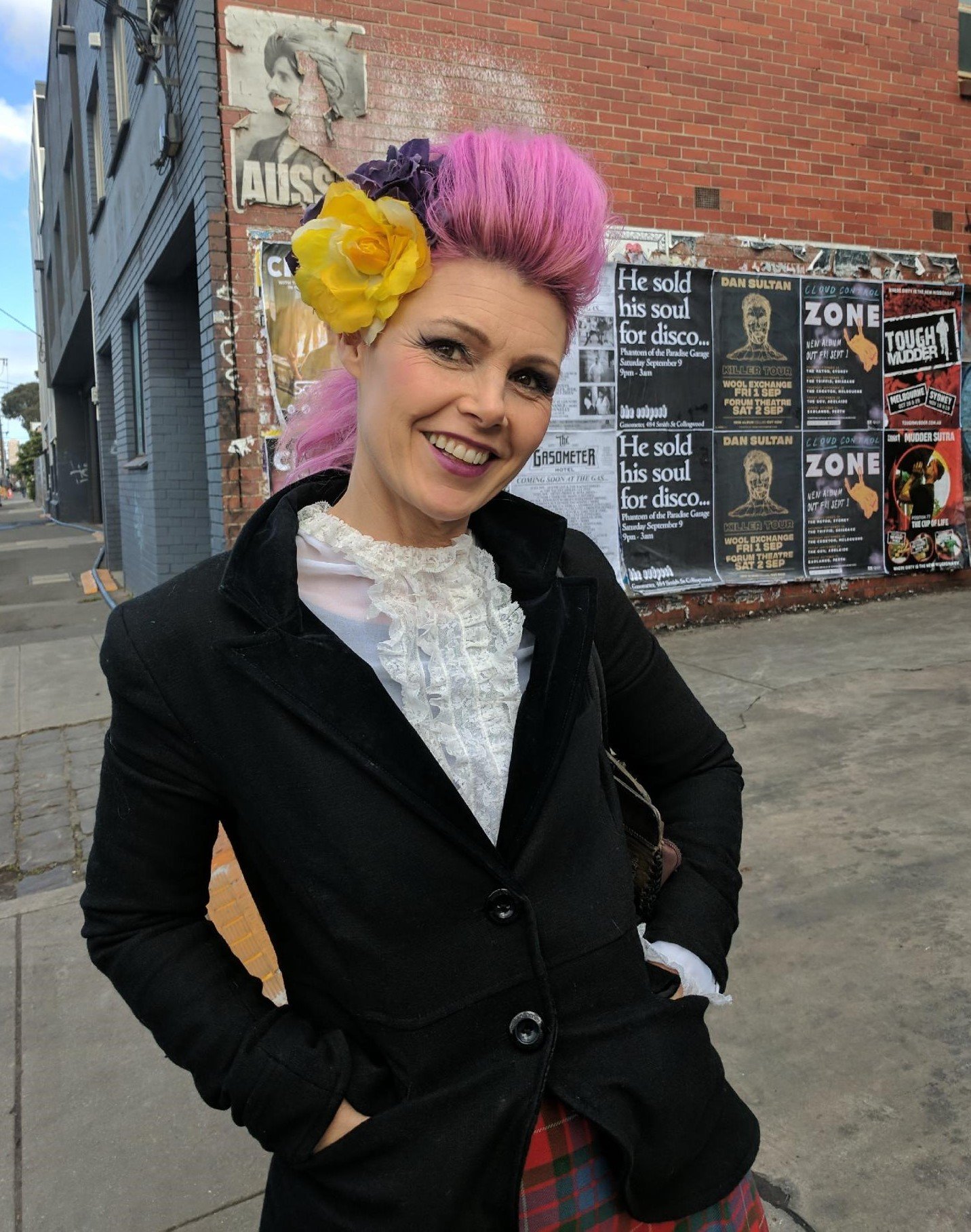
Julianne Negri’s debut children’s novel The Secret Library of Hummingbird House was published in 2020 by Affirm Press and was a 2021 CBCA Notable. In 2018, Julianne was recipient of the Australian Society of Author’s Emerging Writer’s Mentorship Award. Julianne works in children and youth programming for Public Libraries and has been variously a musician, eco-crafter, film maker, television host and mother of five children.

Q & A with Julianne
What is your favourite STEM subject or area and why?
Whenever I read a science magazine or book there are two areas that always jump out at me. One is Paleoanthropology, which is the study of human evolution. The idea of deep time is fascinating to me and there have been incredible discoveries that have shifted the narrative about evolution in my lifetime. The other area that has always fascinated me is Quantum Physics because, quite simply, it seems like magic!
If you could invent something, what would it be?
That’s easy! A time machine. I’ve always fancied myself as a Time Lord.
What is your favourite science fact?
Did you know that space tastes like raspberries? In 2009, astronomers studying the Sagittarius B2 dust cloud in the centre of the Milky Way, identified a chemical called ethyl formate which happens to be the chemical responsible for the flavour of raspberries. Mmm. Raspberry space!
What books or series did you love as a child?
We didn’t own many books when I was a child, but a mobile library, a big truck full of books, would come to town every Friday. The Narnia series by C. S. Lewis were the books I loved the best. Those books absorbed me. I remember I bawled my eyes out when I read the last book in the series. They were also special because my best friend read them and loved them too. Sharing books with someone you love always makes them more significant. It's true that I have often tried to find a portal to Narnia, but so far it hasn’t worked. I’m still here!
Why do you think there has been so much interest around STEM pathways and STEM in schools in recent years.
The way STEM is taught has changed so much. When I was young, the emphasis was on methodology, memorising and maths and if you were a creative person, you were directed away from science and towards arts and humanities. Now STEM is taught in a more holistic way that recognises that creative thinking is integral to science! Science communication has changed too – there are a now so many wonderful science communicators engaging children with the wonder and possibilities of science. Of course there are also wonderful publications now – so much gorgeous, fun and mind blowing STEM non-fiction books for kids – including the wonderful Aussie Stem Star series!

NOVA WEETMAN
Nova Weetman lives in Melbourne with her family. She has written for TV and is the author of many middle grade and young adult novels. The Secrets We Keep was shortlisted for the Readings Children’s Book Prize, the Speech Pathology Book of the Year Awards and the ABIA Awards. The sequel, The Secrets We Share, was a 2018 CBCA Notable Book and won the KROC Kids Reading Oz Choice Awards, NT – Best Fiction for Years 7 to 9. It was also shortlisted for the Speech Pathology Australia Book of the Year Awards. Nova’s middle grade novel Sick Bay was a CBCA Notable Book and shortlisted for the ABIA Awards.

Q & A with Nova
What is your favourite STEM subject/area and why?
My favourite STEM subject is physical and environmental geography. I studied Geography as a subject through my VCE and I think it really tapped into my love of place and landscape and soil and rocks. As part of my VCE studies I wrote a paper on the soil composition of the area where I grew up - which was apple orchard country. I always had my hands in dirt as a kid and grew flowers and veggies in our garden. My parents were committed to native plants and so I had a very solid education about native wattles and gums and other trees and soil coverings that my parents planted.
If you could invent something, what would it be?
I would invent a way to wind back the impacts of climate change.
What books or series did you love as a child?
I owned all of Harry Butler’s In The Wild series and the Australian children’s books Botternsikes and Gumbles. These books were my favourites. I read and reread them over and over again. Harry Butler taught me about spiders and snakes and as a kid I used to collect dead spiders that I’d find in our house and the garden.
Why do you think there has been so much interest around STEM pathways and STEM in schools in recent years?
I think we are trying to understand our world. Perhaps climate change has prompted all of us to think more about our impact on the natural environment and that has created a thirst for understanding. I also think as a society we are always looking forwards, possibly detrimentally, and we think that science is our way out, or our way forward. This means there are jobs in STEM, so there is a push on education.
What did you love most about writing about Michelle Simmons?
Before I started I had no idea about quantum computing - to be honest I’m still not an expert! But I loved the opportunity to try and understand this very different way of thinking. I also really loved Michelle’s frankness and that she could have done so many things with her life and her career and she chose quantum physics.
What’s your favourite part of the book?
My favourite part is definitely Michelle’s chess career as a child. I write children’s books and so I love the idea of a child who is naturally skilled at something that they decide is not the thing they will follow in life.